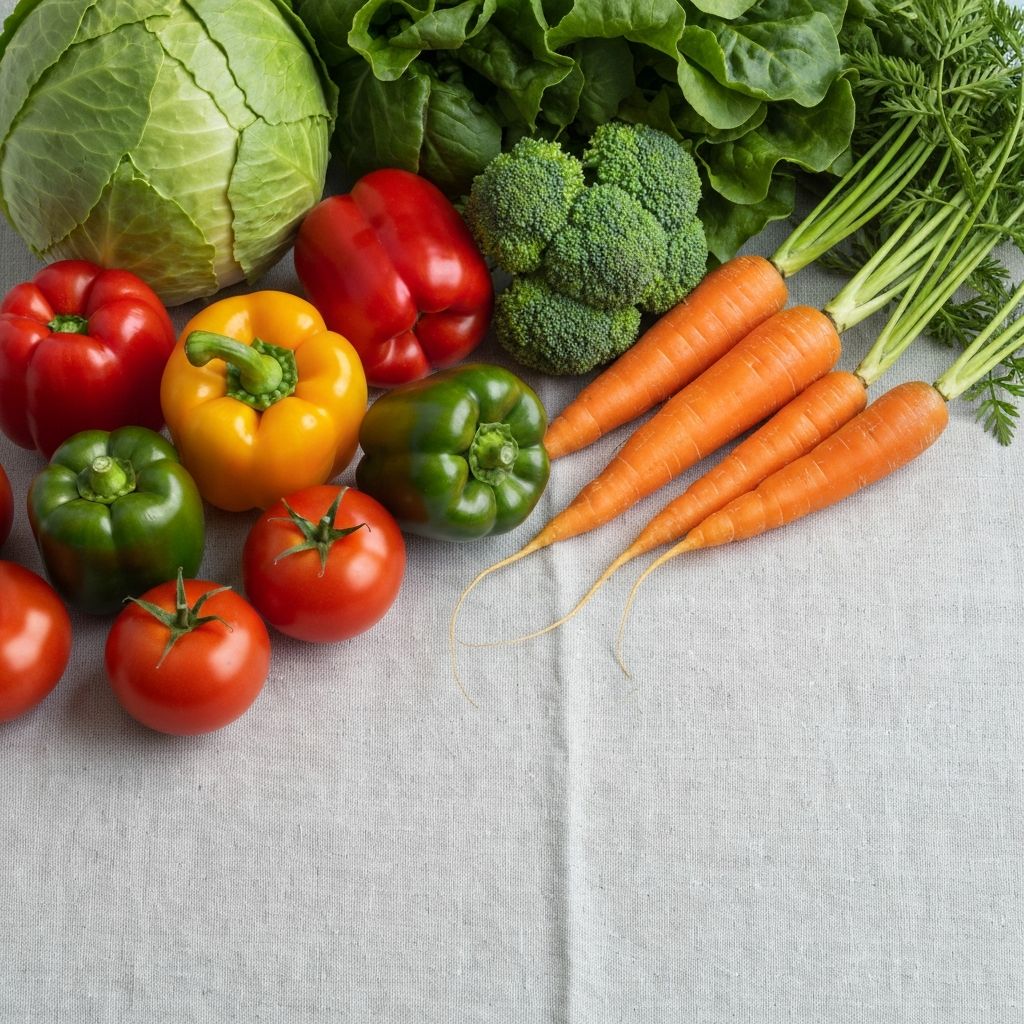
Consuming a wide variety of foods ensures exposure to diverse nutrient profiles, phytochemicals, and beneficial compounds. Different foods contain different combinations of vitamins, minerals, and bioactive substances.
Practical applications:
- Eat the Rainbow: Include foods of different colors daily. Red, orange, yellow, green, blue, and purple foods each offer unique nutrient profiles.
- Rotate Protein Sources: Alternate between poultry, fish, beef, legumes, and plant-based proteins throughout the week to access different nutrient combinations.
- Explore Different Grains: Beyond wheat, include oats, rice, quinoa, barley, and legumes to diversify micronutrient intake.
- Include Various Vegetables: Raw, steamed, roasted, and fermented vegetables each offer benefits. Cruciferous, leafy, and root vegetables provide different nutrients.
- Experiment with Herbs and Spices: These concentrated sources of phytonutrients add nutritional density and flavor without calories.
Benefits of variety: Reduces risk of nutrient deficiencies, provides diverse phytonutrients with complementary protective effects, supports a healthy gut microbiome through diverse fiber sources.